Opening
The cards are still hidden, so the myth has no face yet. This is the moment before fate chooses its mask.
Micro Reading
This pairing was compelling because it brought blunt clarity into direct contact with a truth that has already been softened by time. The reading showed that hesitation is not neutral here: it is the final layer hiding a decision you already recognize.
Reading Beats
Opening
The cards are still hidden, so the myth has no face yet. This is the moment before fate chooses its mask.
Question
Ask the question this card makes you ask. You already know which one.
Answer
The answer is waiting in the part of you that hesitates. What crosses the first card is not an obstruction, but a shape your truth has taken so you can see it. Do not ask whether the sign is permission; ask why you needed permission at all. The path is already leaning in one direction, and your silence has been naming it.
Article
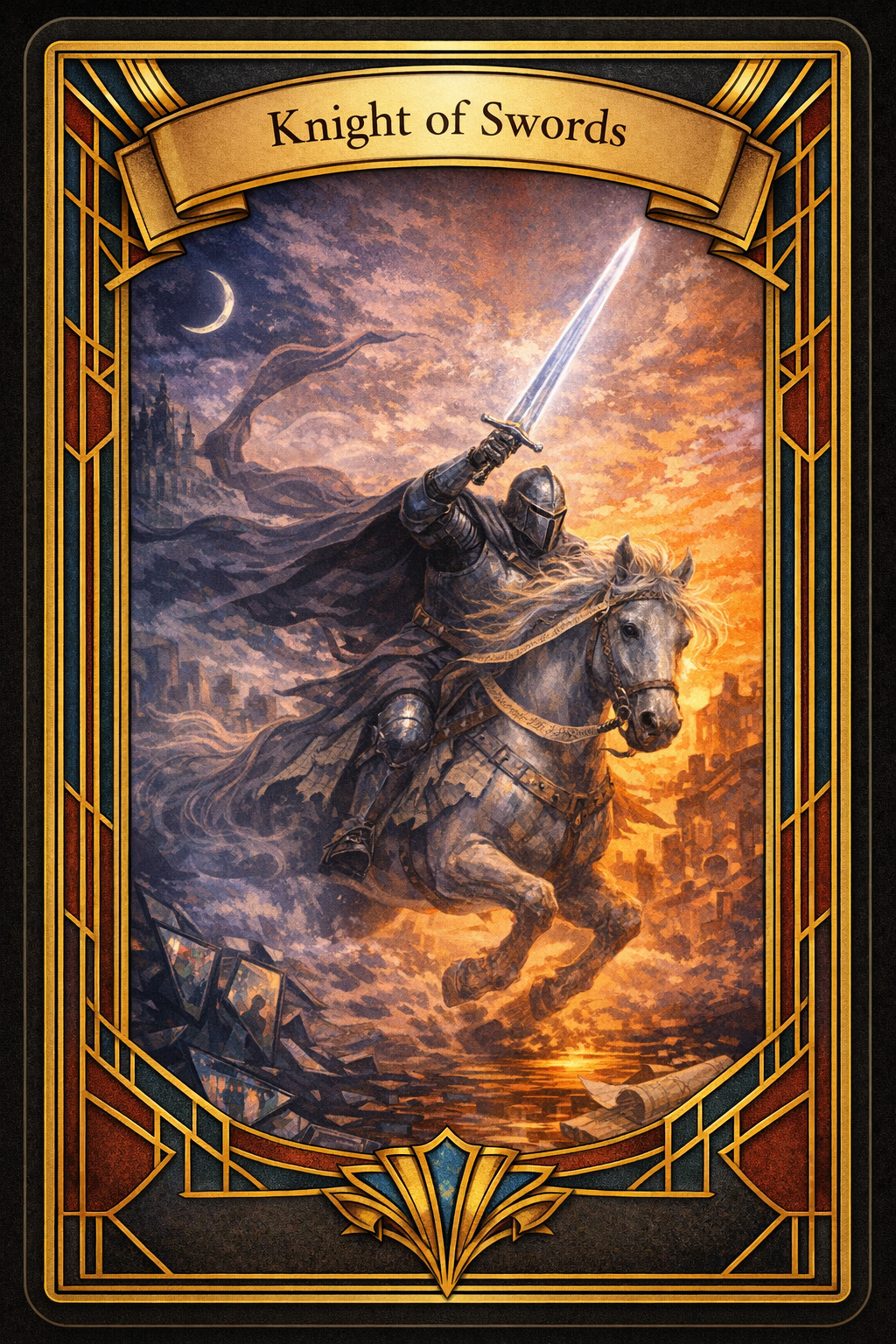
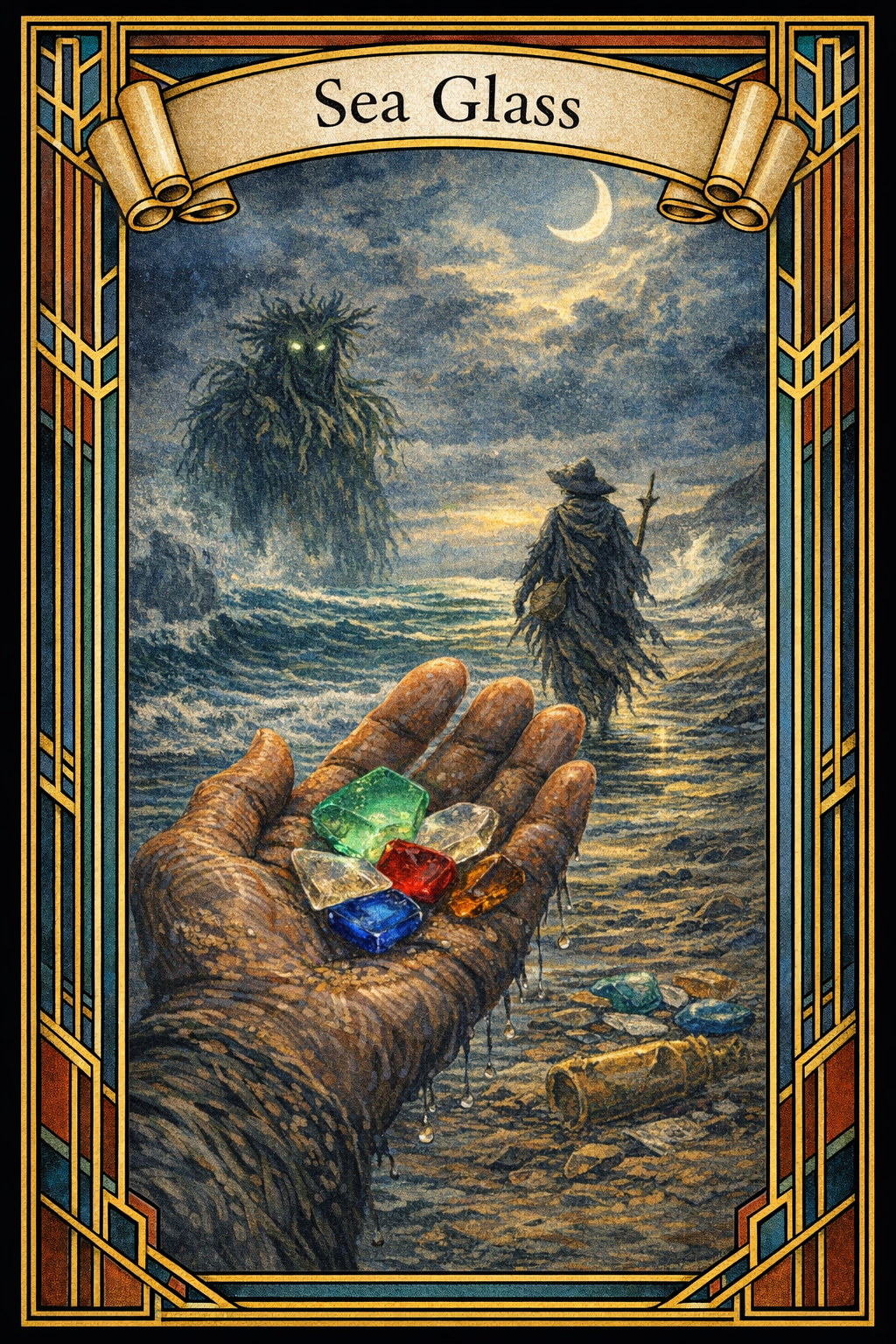
This reading was interesting because it did not frame the moment as confusion so much as delayed recognition. The Knight of Swords brings pressure, direction, and the demand to name what is true. Sea Glass changes that force by reminding us that truth does not have to arrive as damage. Together, they point to a choice that has been forming for a while, where the real issue is not whether you know the answer, but why you have been waiting to admit it.
The opening and closing lines sharpen that idea. The reading begins before the cards are revealed, in a space where "fate chooses its mask," and ends by saying your silence has already been naming the path. That makes the draw feel less like a prediction and more like an unveiling.
What made this reading unique was the contrast between speed and erosion. The Knight of Swords is all momentum, decision, and cutting through fog. Sea Glass comes from breakage that has been worn smooth over time. One card acts fast; the other proves that time has already been at work.
That contrast keeps the reading from becoming simplistic. The Knight alone could suggest rushing in with a hard truth. Sea Glass alone could suggest healing, reflection, or patient acceptance. But together, they create a more precise message: the truth is ready to be spoken because its sharpest edges have already been softened. This is not reckless action, and it is not endless processing. It is the moment when reflection has done enough, and honesty can finally move.
The answer text also made the reading stand out. It says the crossing shape is not an obstruction, but your truth made visible. That fits both cards exactly: the Knight names what has been avoided, while Sea Glass shows that what once could have cut you can now be held and understood.
The relationship between these cards is about how truth changes when time has worked on it. The Knight of Swords represents the urge to cut through delay, expose what is real, and stop circling the same thought. Sea Glass represents what happens after fracture, when experience is not erased but made touchable. Put together, they suggest that clear speech is most useful when it has been tempered by experience.
This pairing also reveals the Knight in a better light. In his myth, accuracy can become cruelty if he forgets to look. Sea Glass answers that weakness directly. It offers softened truth, honesty without unnecessary harm, and the discipline to hold the past without turning it into a weapon. In return, the Knight gives Sea Glass direction. He keeps healing from becoming passive delay or a story you live inside forever.
So the lesson of the pair is simple and strong: what hesitates in you is not asking for more signs. It is asking for the courage to speak a truth that is finally ready to be carried well. The Knight clears the fog; Sea Glass makes sure what remains can be touched without reopening the wound.